Iowa septic repair and renovation
Septic system repair in Iowa
Septic system repair in Iowa runs from a few hundred dollars for a targeted fix to $2,500 to $10,000 for a drainfield replacement, and $6,282 to $7,464 for a conventional replacement system around Des Moines. Those are cost-aggregator ranges, not contractor quotes. Which end you land on is decided by one line on an inspection report, and the county permits the work before it starts, so a repair is measured in weeks rather than days.
Most Iowa septic repairs start with that single sentence on an inspection report: the system does not meet current standards. Around Council Bluffs that finding runs through Pottawattamie County Environmental Health, the office that permits the fix, and the same pattern holds across the state's on-septic counties. This page explains what a failed time-of-transfer inspection typically requires, the range of repairs from small to full replacement, and how the work fits into a home sale.
What a failed inspection requires
A failure is not the end of a sale, but it does add a step. When a time-of-transfer inspection finds a system inadequate, Iowa Code section 455B.172 requires it to be renovated to current construction standards, with the technical requirements set out in Iowa Administrative Code 567, Chapter 69. The most common rural failure is having no secondary treatment after the tank, an older setup that runs the tank straight to a discharge, or a secondary component that has stopped working. Those are exactly the findings that trigger the renovation requirement.
Repairs run from small to full replacement
"Repair" covers a wide range, and the inspection report tells you where a given system lands on it. Smaller, targeted fixes and larger renovations look very different in scope and cost:
- A cracked or failed distribution box that no longer spreads effluent evenly.
- Broken inlet or outlet baffles, or a missing riser or lid.
- A failed effluent pump or a clogged line between components.
- A drainfield that no longer absorbs, which can mean replacing the field.
- Adding secondary treatment where a system has none, the change that brings an old setup up to standard.
When the finding is a whole-system problem rather than one part, the project shades from repair into replacement or new installation, which carries its own sizing, soil, and permit questions.
The county permits the fix, not just the sale
Renovation work is reviewed locally. A county environmental health office typically evaluates the site, approves the design before permitting, and confirms the finished work. In Pottawattamie County, that includes a site evaluation, design approval, and a certificate of completion under the county's onsite wastewater ordinance and state code.
That review is why a repair is not a same-week task. Building in time for permitting, and starting before you are under contract, keeps a corrective project from colliding with a closing date.
How a repair fits into a home sale
Timing is the whole game. Iowa lets the seller complete the renovation before closing, or lets the buyer take it on under a binding agreement within a reasonable window the county sets. In practice, who pays and by when is written into the purchase agreement. That is why an early inspection is leverage: a seller who already knows the result can price the work, line up the repair, and go to market with the problem scoped instead of discovering it mid-deal. The time-of-transfer guide lays out that sequence in full.
What "renovate to current standards" means
The phrase in the statute does real work. Bringing a system up to current construction standards usually means giving it secondary treatment, the stage that treats effluent after the tank instead of discharging it once it has only settled. On an older property that never had it, that can mean a new drainfield sized to the soil, or an alternative treatment component where soils or a small lot rule out a conventional field. The design is driven by a soil and site evaluation, which is one reason the county reviews and approves the plan before any work is permitted. An independent local septic contractor handles the design and the build; the county confirms it meets code.
How long a repair takes
A targeted fix, a distribution box, a baffle, or a pump, can be quick once parts are on hand. A drainfield replacement or a new secondary system is a multi-step project: a site and soil evaluation, a design, a county permit, the installation, and a final inspection or certificate of completion. That chain is measured in weeks, not days, and weather can stretch it. It is the single strongest argument for inspecting before you list rather than after you are under contract, because a corrective project that starts on a buyer's clock is the one most likely to threaten a closing.
One practical note: keep the documentation. The permit, the design, and the certificate of completion become part of the property's record, and a renovation filed with the county is what lets a future transfer inspection confirm the system now meets standard. A repair done without that paper trail can resurface as a question at the next sale.
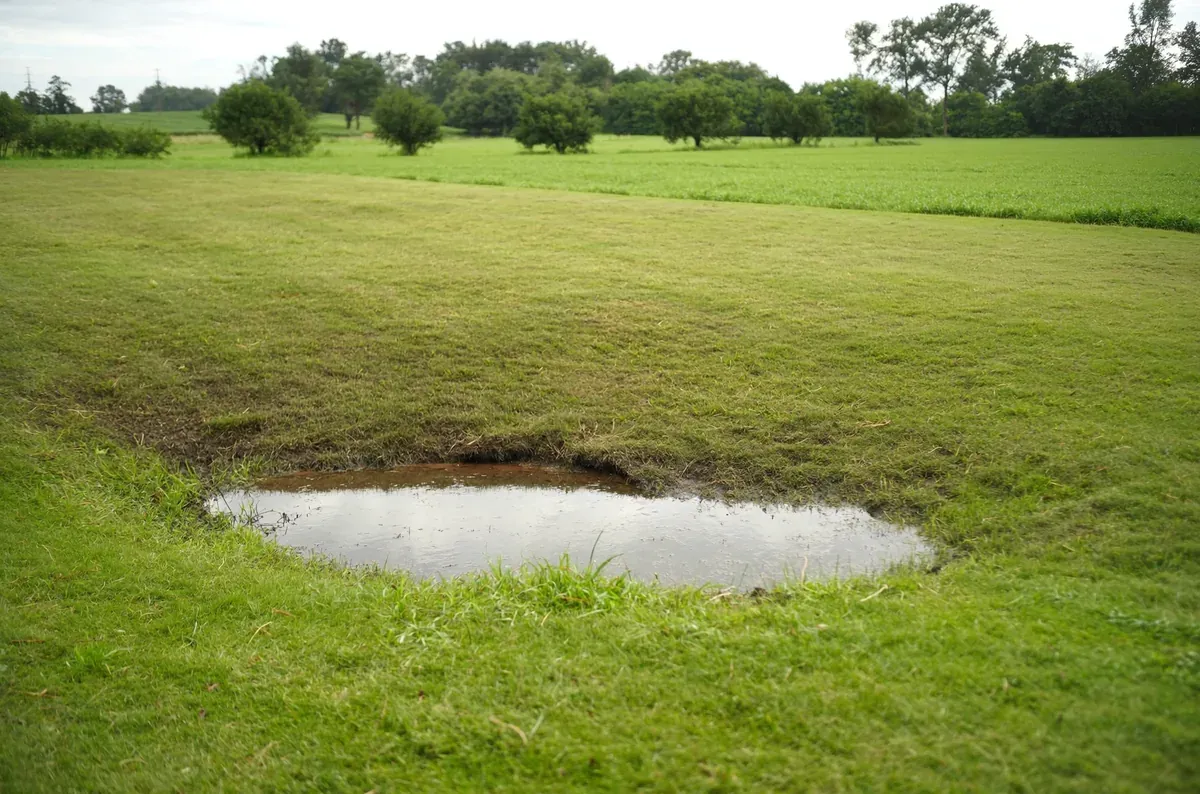
Can a septic drainfield be repaired?
Sometimes, and what decides it is why the field stopped working. A field that is failing because the tank was never pumped on schedule, so solids carried downstream and clogged the soil, can occasionally be recovered once the source is fixed. A field that has simply reached the end of its absorption life, or one on soil that was never right for it, gets replaced rather than repaired. An inspection report and a soil evaluation are what tell the two apart, and in Iowa a replacement field has to be designed and permitted by the county before anyone digs. Because the drainfield is the part that is buried, sized to the soil, and expensive to rebuild, it is also the part that routine septic tank pumping exists to protect.
How much does septic system repair cost?
A drainfield replacement is published at roughly $2,500 to $10,000 for Iowa, and a full conventional system replacement is published at $6,282 to $7,464 around Des Moines. Smaller targeted fixes, a distribution box, a baffle, a riser, or a failed pump, sit well below those numbers. No Iowa contractor publishes flat repair prices, so the figures below come from cost aggregators, not contractor quotes, and are marked as such. Use them to budget, then get an actual quote on your own system.
| Work | Typical range | Published by |
|---|---|---|
| Drainfield replacement | $2,500 to $10,000 | Angi (Iowa band) |
| Full new system or replacement | $6,282 to $7,464 | ProMatcher (Des Moines) |
Ranges above are cost-aggregator published, not contractor quotes. Smaller fixes, like a distribution box or a baffle, sit well below these numbers; a failed drainfield sits at the top. The takeaway holds regardless of the exact figure: the inspection is the small cost, and a renovation is the large one, which is why catching a problem early matters.
Get a free quote from a local pro
If an inspection turned up a problem, tell us your county and what the report said. The quote is free, and you hire whoever you choose at their price. See how we make money, or start your quote below.